.jpeg)
The Alpha Paradox: On AI, Exclusivity, and the Question Nobody Answered
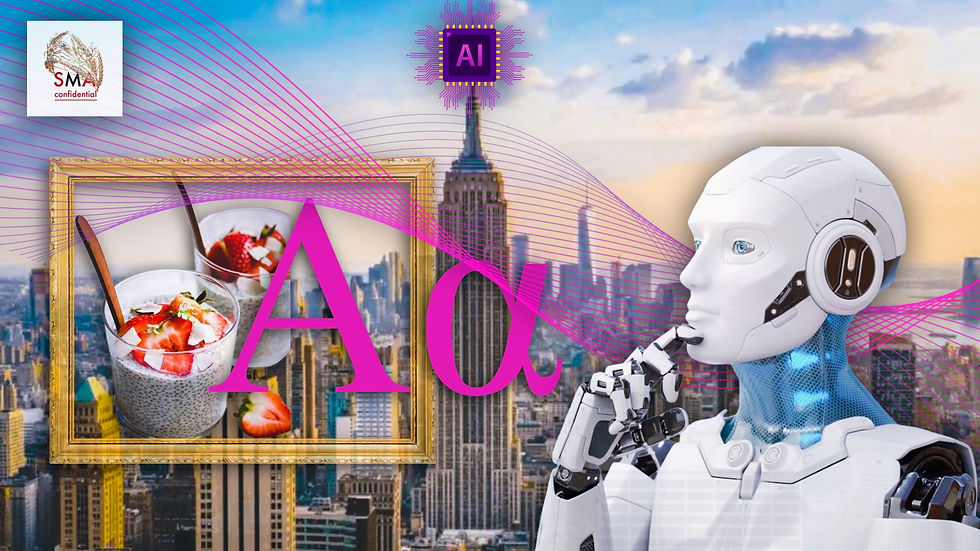
A recent article in Town & Country by Norman Vanamee, the magazine’s Articles Director, prompted a thought worth examining. The piece described an information session at Alpha School’s New York City outpost — a K–12 private school in the Financial District that charges $65,000 a year and has built its proposition around something it calls two-hour learning: two hours of AI-led academic instruction per day, followed by the remainder of the school day devoted to workshops, entrepreneurial projects, and what the school describes as life skills. One hundred and fifty parents filed through a check-in process involving iPads and identity verification — a thirty-minute queue before the coffee and chia pudding — to hear about the future of education.
The school is called Alpha.
It is worth sitting with the name for a moment. Not because it is accidental — it is almost certainly deliberate — but because it announces, with considerable confidence, what the school believes it is selling. Alpha. The first. The highest. The one above the others. The name is the pitch, compressed into five letters.
The proposition, as presented that morning in the Financial District, rests on a specific claim: that AI-led instruction, delivered in a beautifully designed space that one attendee compared to a WeWork with conference rooms, represents a genuinely superior educational experience. Parents who have pulled their children from well-established Manhattan private schools — schools that took considerable effort to enter in the first place — are paying a premium not merely for education but for what that education signals: we are ahead, we are different, we are Alpha.
The $65,000 price point is not incidental. It is structural. Exclusivity, in its conventional form, is purchased through scarcity: limited places, selective admissions, the difficulty of entry. Alpha has the admissions selectivity, but it has added something new to the formula. It has made the technology itself a luxury article. The AI is the differentiator. The AI is what you are paying for.
There is, however, a difficulty with this formulation that the morning’s presentation did not address.
AI is perhaps the only product in recent memory that structurally resists being made exclusive. The glass building can be exclusive. The curated cohort of families can be exclusive. The workshops and the entrepreneurial projects and the Hamptons summer programme can all be made exclusive. The underlying intelligence cannot.
A teenager in rural Finland has access to the same large language models as a fourth-grader in the Financial District. A self-taught programmer in Nairobi can interact with the same AI tutoring capability that Alpha has built its curriculum around. Duolingo has been deploying AI-personalised language instruction for years, available to anyone with a smartphone. Khan Academy’s AI tutor is free. The two-hour learning model rests on technology that, by its fundamental nature, belongs to everyone.
This is not a criticism of AI — it is, in fact, one of its most significant qualities. AI is the most democratic intellectual resource in human history. It has no interest in who can afford it, where they were born, or which school they attended. It responds to the quality of the question, not the status of the questioner.
Which creates an interesting paradox for a school named Alpha. The product Alpha is selling as its central differentiator is the one element of its offering that cannot, in principle, be made to justify a $65,000 price point. What Alpha is actually selling — the thing that the money genuinely purchases — is the glass building, the curated families, the entrepreneurial workshops, and the social architecture of a highly selective community. These things are real, and they are not without value. But they are not the AI. The AI, stripped of its luxury setting, is available to the child who cannot afford the chia pudding.
In the room that morning, among the questions from 150 parents, one stood apart. A woman pointed out that real working life — the professional world these optimised, personalised children will eventually enter — is not personalised. It is full of boredom, repetition, friction, and one-size-fits-all environments. Given that, she asked, is Alpha setting its students up for failure? Will they arrive in the world expecting it to be tailored to them at all times?
Nobody really had an answer.
The display board about grit and resilience was pointed to. The staff spoke about how failure is good, feedback is good. The language was recognisable: the vocabulary of leadership books, the grammar of organisational development seminars. But the vocabulary of resilience is not the same thing as the experience of it. And the woman’s question had not been about whether Alpha teaches resilience. It had been about something more structurally uncomfortable: whether an environment that has removed all the friction is capable of teaching anything about how to navigate a world defined by it.
The silence that followed was the most honest moment of the morning.
The irony that went unspoken is this: the people who have most shaped the world these children will inhabit — the founders, the builders, the thinkers, the disruptors, the artists — were almost universally formed by exactly the kind of unoptimised, friction-heavy, imperfectly calibrated environments that Alpha exists to replace. The boredom that produces lateral thinking. The failure that produces judgment. The confusion that produces genuine question-forming, as distinct from the answering of questions that have already been asked.
Winston Churchill failed examinations. Steve Jobs dropped out of a college he could barely afford to attend and wandered into calligraphy classes with no particular plan. The curriculum did not produce them. The friction did.
This is not a nostalgia argument. The world has changed, and AI has changed it in ways that make certain old frictions genuinely obsolete. The question of whether a child should be taught to look up information manually when information retrieval is no longer a limiting factor is a reasonable one. The optimisation of genuine inefficiency is legitimate.
But the question the woman asked in that room points to something that optimisation cannot reach. The capacity to tolerate boredom without disintegrating. The ability to function in an environment that does not adjust itself to you. The resilience that comes not from being told that failure is good but from having actually failed, in an unbeautiful way, in a room without chia pudding, with no workshop to process it.
Alpha may well produce academically accelerated, entrepreneurially skilled, coding-literate young people. It may — its proponents would argue it will — produce children better prepared than their traditionally-schooled peers for a world restructured by AI. These are not trivial achievements.
What it cannot produce, almost by design, is the thing the woman in the audience was asking about. The self that has been built in resistance to something. The character formed not by personalised feedback loops but by the encounter with a world that did not particularly care about your learning style.
That is not, it turns out, something the AI can teach. And it is not something you can buy for $65,000 a year.
Founder & CEO of SMA Crown Confidential
Digital Confidantes: Bespoke AI intelligence for private decision-makers
Inspired by a piece published in Town & Country by Norman Vanamee, Articles Director, April 2026.
This article is part of an ongoing series by SMA Crown Confidential on the intersection of private wealth, cultural intelligence, and the future of bespoke AI.


Comments